
The AI power user gap is becoming a work design problem.
Fast Company covered Microsoft’s 2026 Work Trend Index under the headline “AI power users are pulling away from everyone else, Microsoft says”. The useful signal is not that some people prompt more often. The strongest users are changing the work around the tool.
Microsoft reports that 66% of surveyed AI users spend more time on high-value work because of AI. It says 58% produce work they could not have produced a year earlier. Among “Frontier Professionals,” Microsoft’s term for its most advanced AI users in the survey, that number rises to 80%.
That is the real gap. The best users are expanding what they can do.
The Advantage Starts Before The Prompt
Access to AI is cheap now. Most people can open a model, paste a prompt, and get a polished answer. That creates motion, but a better outcome takes more than motion.
The gap opens when one person uses AI to generate more output and another person uses AI to redesign the work.
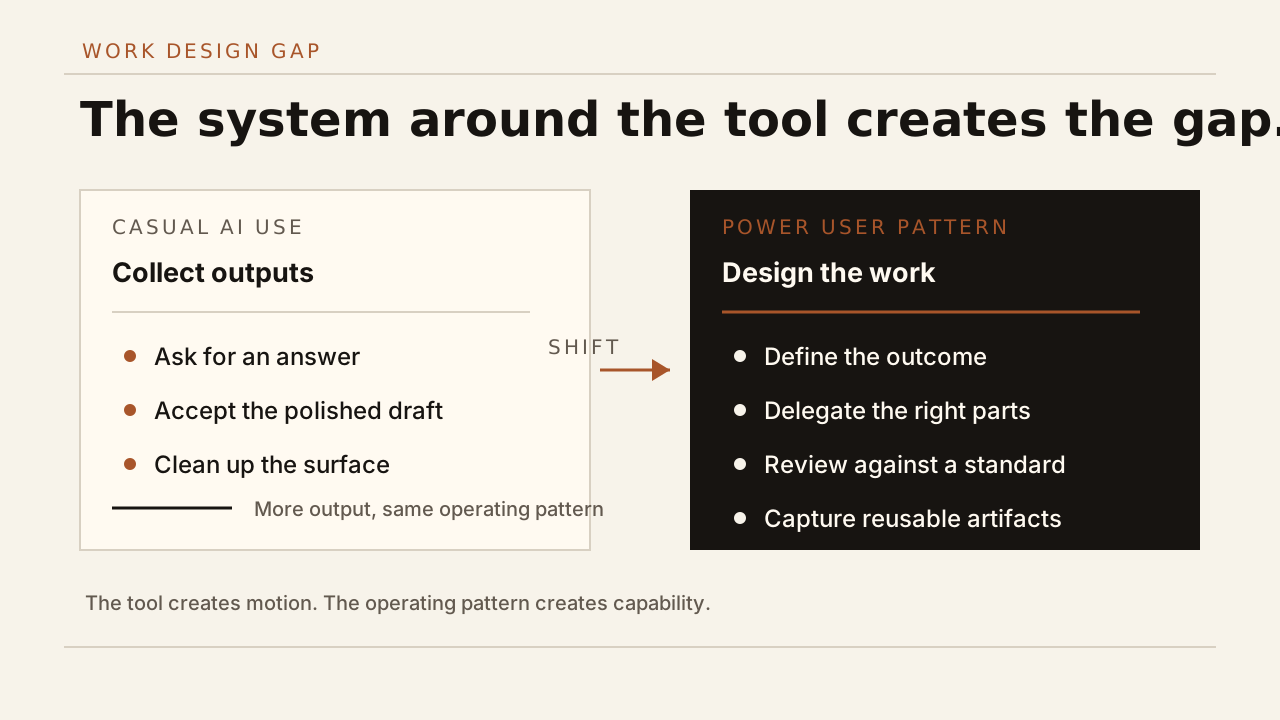
The stronger user defines the outcome, supplies context, decides what stays human-led, reviews the result against a standard, and captures the pattern so the next run starts from a better place.
The difference is the system around the tool.
The Pause Is The Skill
Fast Company highlights a behavior that matters more than the productivity headline: 53% of Frontier Professionals intentionally pause before starting a task to decide what AI should do and what a human should do. That compares with 33% of AI users overall.
That pause is the skill.
Before the prompt, there is a design decision:
- What outcome am I trying to produce?
- What should AI draft, search, compare, structure, or challenge?
- What must remain human-owned?
- What evidence will I need?
- What standard will I use to judge the result?
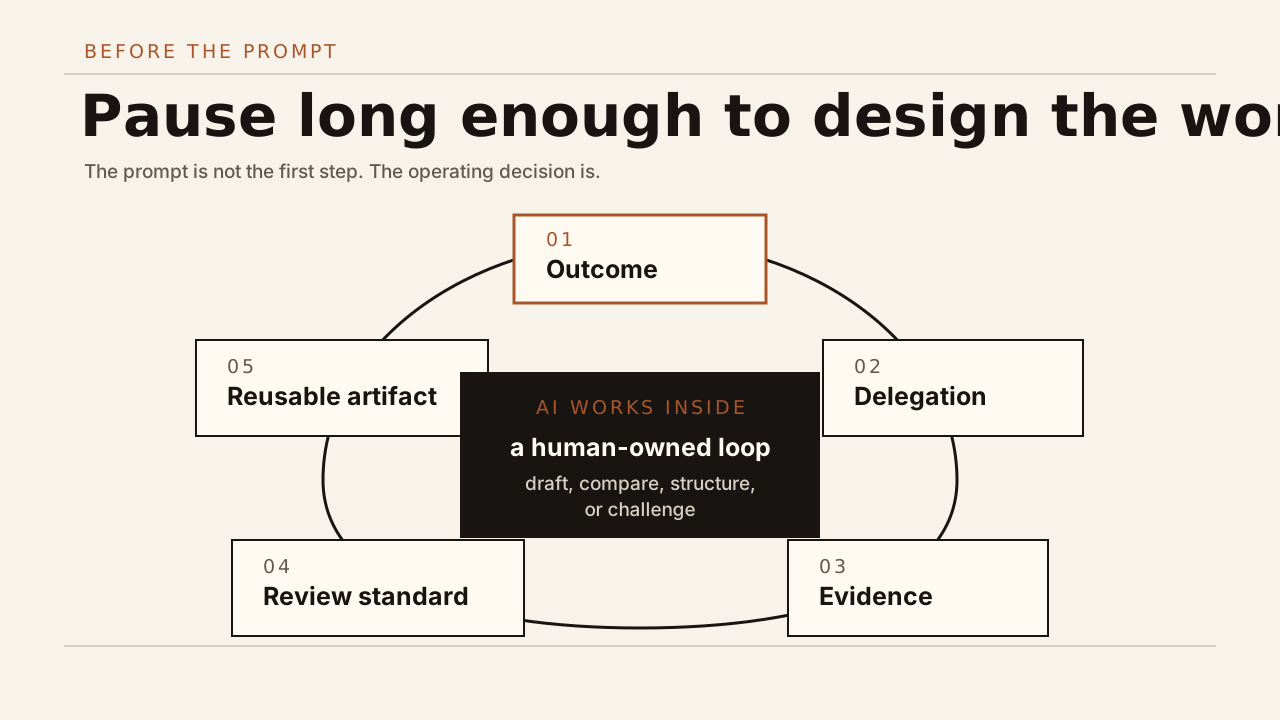
AI can accelerate weak work. It can also expose unclear outcomes, vague handoffs, and invisible quality bars. When those problems are present, AI usually makes the mess move faster.
Power users turn the process into a system.
Judgment Keeps Speed Trustworthy
Microsoft reports that 86% of AI users treat AI output as a starting point, not a final answer. That should be the baseline.
AI output starts the check. The sentences may be clean, the structure may look confident, and the answer may still be incomplete, wrong, shallow, or misaligned with the real task.
A capable operator asks:
- Does this answer the real question?
- What assumptions are hidden?
- What evidence is missing?
- What risk does this create if I use it as-is?
- What should I keep human because the skill matters?
That habit keeps speed trustworthy.
Capability Compounds When The Workflow Improves
Fast Company quotes Microsoft’s Katy George using the phrase “capability add.” I like that frame because it moves the conversation beyond simple automation.
Time saved matters. New range matters more.
The better question is: what can this person or team now do that they could not do before?
That question makes the work practical. A consultant can turn raw client notes into a sharper diagnostic. A founder can test a strategy argument before taking it to the team. An operator can build a repeatable briefing workflow instead of rebuilding context every week.
The gain compounds when each cycle leaves something behind: better prompts, templates, review rules, source packs, decision records, and operating habits.
A single AI output can be useful. A reusable way to do the work is more valuable.
The Real Divide
The AI divide will be between people who collect AI outputs and people who make the work better each time.
Small teams need shared working rules: which workflows to redesign first, where AI can safely help, where human review stays explicit, and how useful patterns get captured.
This is the problem Pinnacle Pathways is exploring. It starts with an AI Capability Audit: a map of the work, the human-owned decisions, the review points, and the first workflow to improve.
The durable advantage is in the way the work gets done. AI can help with execution, but people still have to build the habit.
Sources I Am Working From
- Fast Company: “AI power users are pulling away from everyone else, Microsoft says”.
- Microsoft: 2026 Work Trend Index Annual Report.